If you search for an AI development company in Bangalore, you'll get hundreds of results — and the marketing is indistinguishable. Everyone claims generative AI expertise, everyone has a Fortune-500 logo wall, everyone promises transformation. Having sat on both sides of these evaluations (we build enterprise AI, and we've inherited plenty of failed projects from other vendors), here is the checklist we would use if we were the buyer.
Why most enterprise AI projects fail — and why vendor choice decides it
Industry surveys through 2025 consistently found that the majority of enterprise generative AI pilots never reached production. In the failed projects we've been asked to rescue, the causes were vendor-side and predictable:
- Demo-ware engineering: the pilot ran on ten hand-picked documents; production had two million with contradictions, and the vendor had no data pipeline capability.
- No evaluation discipline: quality was assessed by "it looks right," so every model update was a gamble nobody could quantify.
- No operations plan: the vendor shipped code and left. Six months later the model behaved differently, costs had tripled, and nobody owned it.
The 7-point evaluation checklist
- Ask for a system that has been in production for 12+ months. Not a pilot, not a demo — a reference where you can ask the customer what broke in month eight and how the vendor responded. This single question eliminates most of the field.
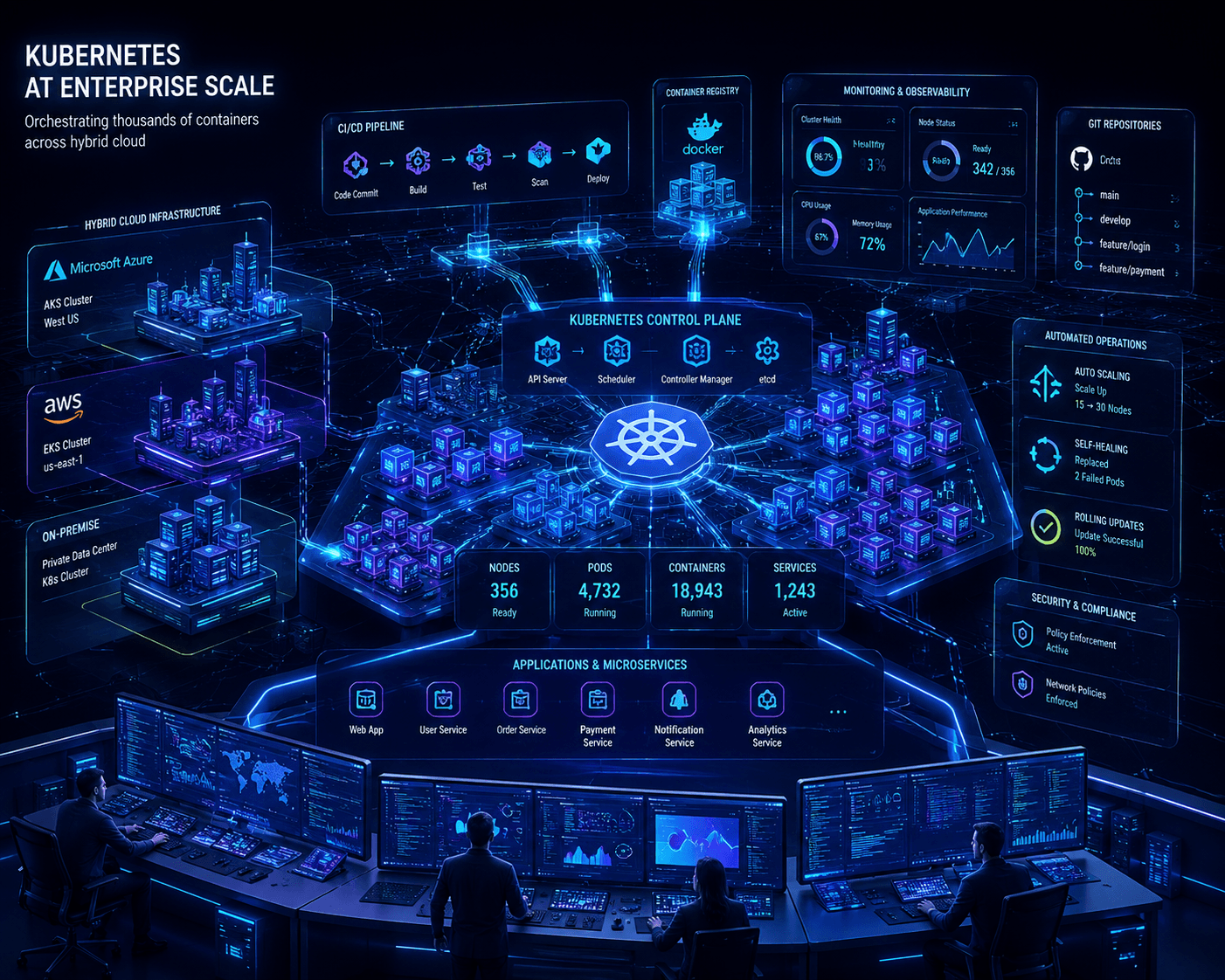
- Probe the data engineering bench. Enterprise AI is 70% data work: pipelines, document processing, permission-trimmed retrieval, quality remediation. A company that leads with model talk but can't discuss Azure Data Factory, vector index maintenance, or incremental ingestion will fail at scale.
- Ask how they evaluate quality. The right answer includes test sets built from your real scenarios, scored automatically on every change, with regression gates before release. "Human review" alone is not an evaluation strategy.
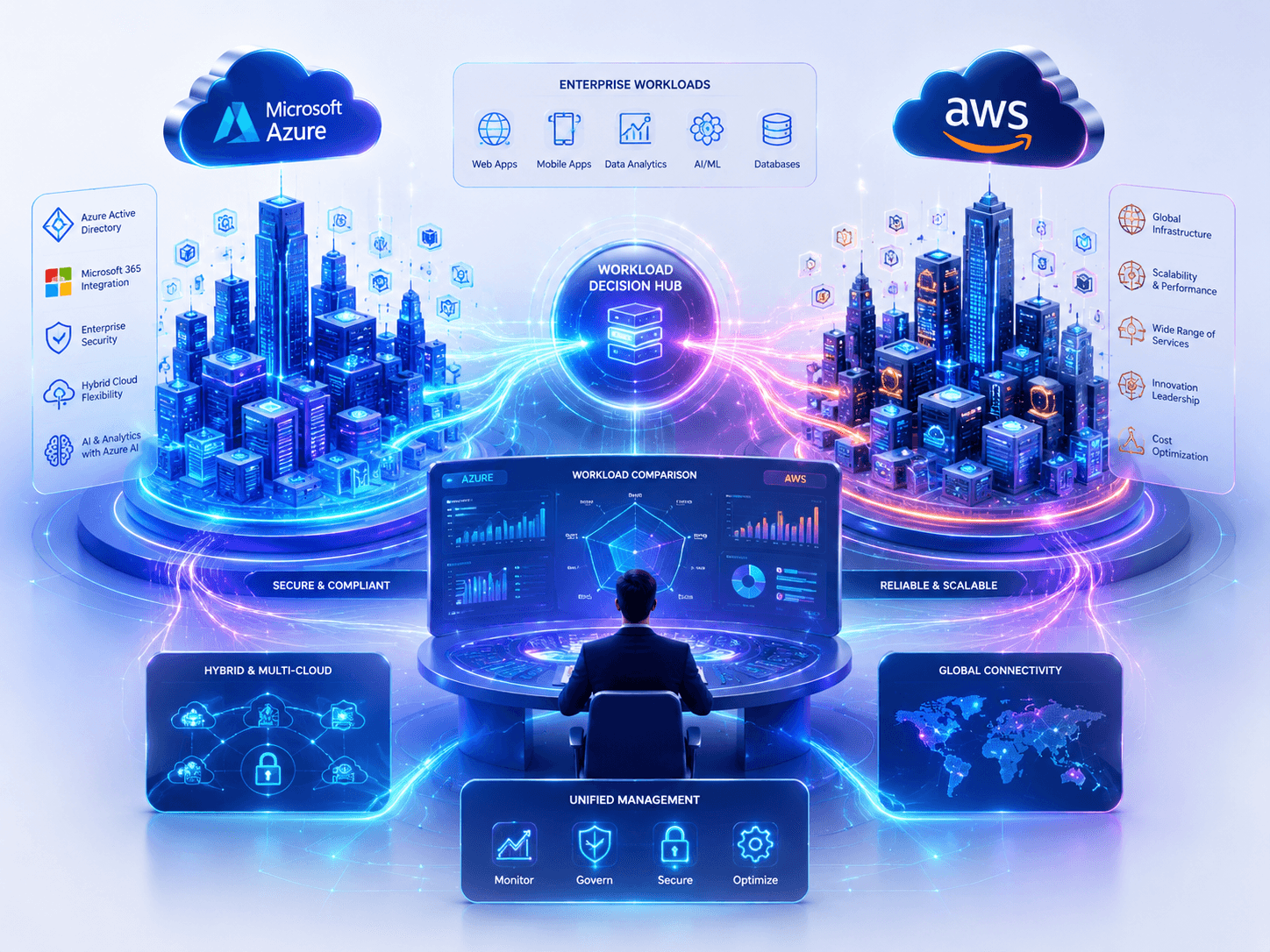
- Check cloud platform depth, not just AI skills. Your AI system will live on cloud infrastructure with identity, networking, and security requirements. A vendor who is also an audited managed cloud operator can run the whole stack; a pure AI boutique will hand you an integration problem.
- Get named delivery engineers in the SOW. The Bangalore pattern of principal-architect pre-sales followed by a junior bench post-signature is as common in AI as it is in ERP. Interview the people who will actually build.
- Ask about cost engineering. Token costs at production volume are a real line item. A serious vendor talks about model routing (small models for simple tasks), caching, batch processing, and monthly cost-per-transaction reporting unprompted.
- Demand a post-go-live operations model. Who monitors output quality drift? Who retests when the underlying model version changes? What's the SLA? AI systems are not fire-and-forget software — if the proposal ends at deployment, so will the value.
Boutique AI lab vs. enterprise services firm: which do you need?
Bengaluru's AI market splits into research-flavoured boutiques and enterprise delivery firms. Boutiques shine on novel ML problems — custom model development, unusual data science. But most enterprise AI in 2026 is an integration and operations discipline: grounding models in your data, wiring them into Dynamics 365 or SAP, governing access, and running them reliably. For that profile, an enterprise services firm with AI capability will out-deliver a research lab — and if your stack is Microsoft, a partner who already operates your Azure and M365 estate removes an entire layer of coordination risk.
Pricing: what enterprise AI actually costs in India
Realistic 2026 ranges from our market experience: a production RAG assistant over enterprise documents runs ₹15–40 lakh; an AI agent integrated with two or three business systems runs ₹30 lakh–₹1 crore; ongoing operations (monitoring, evaluation, model updates, cost management) runs ₹1–4 lakh per month. Quotes dramatically below these bands almost always exclude the data work — which is where the project actually succeeds or fails.
What we do differently at CloudSwift
CloudSwift builds enterprise AI systems — AI agents, generative AI applications, and MLOps — from Bengaluru, on the same Azure foundation we operate as an Azure Expert MSP for 450+ clients. Every engagement starts with a data readiness assessment, ships with evaluation sets and cost instrumentation, and lands into a managed operations model with an SLA, integrated with our broader Microsoft platform services. If you're evaluating vendors and want a second opinion on a proposal you already have, talk to our architects — we'll tell you if it's sound even if you don't hire us.